Verbum Dei Jesuit High School

Fractional CFO Services Proposal

Executive Summary

Scout Financial proposes delivering comprehensive fractional CFO services to Verbum Dei Jesuit High School, providing executive-level financial expertise at a fraction of the cost of a full-time CFO hire. Our proposal addresses the unique financial complexities facing Cristo Rey schools while supporting Verbum Dei’s mission to serve disadvantaged youth in South Los Angeles. Through our specialized nonprofit expertise and deep understanding of educational institutions, we will deliver strategic financial leadership that enhances transparency, strengthens governance, and supports sustainable growth.

Understanding Verbum Dei’s Unique Position  

Verbum Dei Jesuit High School operates within a distinctive educational model that presents both opportunities and challenges. As a member of the Cristo Rey Network serving 300 students, predominantly from low-income Latino and African American families, Verbum Dei provides a rigorous college-prep education and a unique Corporate Work Study Program (CWSP) that gives students real-world work experience. Serving the community for over 60 years – Verbum Dei is woven into the fabric of Los Angeles. 

It costs about $23,000 per student annually, families contribute on average about $1,200 (5%) of that cost. The remaining 95% “funding gap” is covered by philanthropy (roughly 55% of costs) and the work-study program (about 25%), with other sources bridging the rest. This mission-driven model creates both opportunities and challenges for the school’s finances. This model creates complex financial dynamics requiring sophisticated management of multiple revenue streams, work-study logistics, and regulatory compliance. 

The school’s remarkable achievements, including 15 consecutive years of 100% college acceptance rates, demonstrate the impact of the Verbum Dei’s model. However, like many Catholic schools, Verbum Dei faces ongoing financial pressures in an environment where “the economics are a becoming increasingly challenging.” 

Scout Financial – Your Strategic Partner 

Scout Financial brings over 150 years of combined experience in financial services, with specialized expertise in nonprofit accounting and CFO services. Founded in 2012 and headquartered in Pasadena, California, our firm has developed deep competencies in serving mission-driven organizations. 

Our team’s specialized knowledge in nonprofit accounting ensures we understand the unique requirements facing organizations like Verbum Dei, including grant management, restricted fund accounting, and regulatory compliance. 

Scout X Verbum Dei

Our comprehensive fractional CFO services will encompass ten key areas designed to address Verbum Dei’s specific needs. Strategic financial planning will receive the highest priority with 48 annual hours dedicated to developing comprehensive financial plans aligned with the school’s mission and objectives.

Service CategoryMonthly HoursQuarterly HoursAnnual HoursPriority LevelDeliverables
Strategic Financial Planning41248HighStrategic plan, financial projections
Board Reporting & Governance3936HighMonthly board packets, quarterly reports
Cash Flow Management3936HighCash flow forecasts, liquidity management
Grant Management & Compliance2624MediumGrant compliance reports, documentation
Budgeting & Forecasting3936HighAnnual budget, quarterly forecasts
Risk Management & Controls2624MediumInternal controls assessment, policies
Audit Preparation & Support1312LowAudit schedules, documentation prep
Fundraising Financial Support1312MediumFinancial data for campaigns
Work-Study Program Oversight1312LowWork-study financial tracking
Regulatory Compliance1.54.518LowForm 990, state filings

Board reporting and governance support will consume 36 annual hours, ensuring transparent communication with the Board of Directors through monthly board packets and quarterly reports.

Cash flow management represents another critical area requiring 36 hours annually to maintain operational liquidity and financial stability. Grant management and compliance will receive 24 hours of dedicated attention to ensure proper stewardship of restricted funds and donor requirements. Our budgeting and forecasting services will provide 36 hours of strategic planning support, while risk management and internal controls will receive 24 hours of oversight.
Current Financial Position Analysis

$ 0 M
Total Assets
$ 0 M
Total Liquidity
$ 0 M
Investment Portfolio
$ 0 M
Endowment

Strong Liquidity Foundation

Verbum Dei maintains an exceptionally strong liquidity position with $25M in total assets

  • Cash & Cash Equivalents: $10.5M
  • Short-term Investments: $9.4M
  • Long-term Investments: $6.2M

This provides 15 months of operating expense coverage, indicating robust financial stability but also revealing opportunities for enhanced cash management and investment optimization.

Revenue Concentration Challenges

Our analysis reveals significant revenue concentration risks requiring strategic attention:

  • Donations: 51.5% of total revenue ($3.7M annually)
  • CWSP Revenue: 23.3% ($1.7M annually)
  • Investment Income: 14% ($1M annually)
  • Tuition & Fees: 9.3% ($671,048 annually)

The heavy reliance on donor contributions creates revenue volatility that demands sophisticated financial forecasting and donor stewardship strategies.

Cash Flow Volatility
Verbum Dei Jesuit High School Main Account (8150)

Three-Month Cash Flow Analysis

Monthly Net Cash Flows:

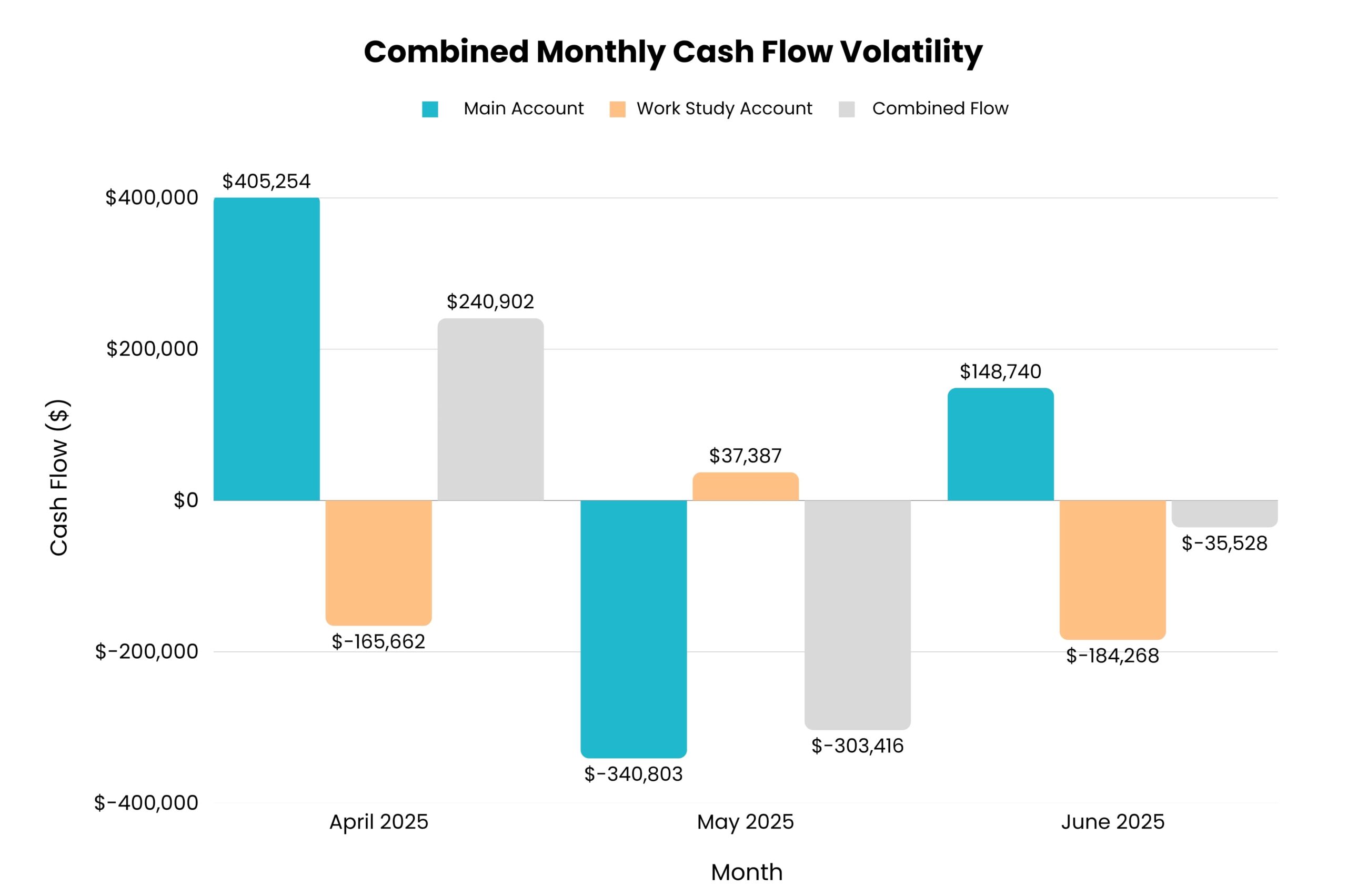
  • April 2025: +$406,524.08
  • May 2025: -$340,803.09
  • June 2025: +$148,740.23

Statistical Volatility Metrics

  • Total Monthly Range: $747,327.17 (from -$340,803 to +$406,524)
  • Average Monthly Flow: $71,487.07
  • Standard Deviation: $309,946.78
  • Coefficient of Variation: 433.6%
  • Monthly Swing as % of Annual Expenses: 94.6% ($747,327 ÷ $7.9M)

The main account demonstrates extreme volatility with monthly swings exceeding 400% coefficient of variation. 
The $747,327 monthly range represents nearly one full month of operating expenses, indicating significant liquidity risk requiring professional cash flow management.

VDHS Work Study, Inc. Account (8896)

Three-Month Cash Flow Analysis

Monthly Net Cash Flows:

  • April 2025: -$165,621.65
  • May 2025: +$37,386.85
  • June 2025: -$184,268.42

Statistical Volatility Metrics

  • Total Monthly Range: $221,655.27 (from -$184,268 to +$37,387)
  • Average Monthly Flow: -$104,167.41
  • Standard Deviation: $128,235.48
  • Coefficient of Variation: 123.1%
  • Persistent Negative Trend: 2 of 3 months negative

Key Observations

The Work Study subsidiary shows consistent cash consumption with only one positive month. The $184,268 June outflow represents 631% of the beginning balance, indicating substantial operational cash requirements.


Combined Entity Analysis

Consolidated Monthly Performance

  • April 2025: +$240,902.43 (Main: +$406,524, Work Study: -$165,622)
  • May 2025: -$303,416.24 (Main: -$340,803, Work Study: +$37,387)
  • June 2025: -$35,528.19 (Main: +$148,740, Work Study: -$184,268)

Critical Risk Factors

  1. Hidden Cash Flow Risk: Positive main account performance can be completely offset by Work Study outflows
  2. Intercompany Dependency: $200,000 transfer from Work Study to main account in June indicates cash flow coordination challenges
  3. Dual-Entity Complexity: Independent cash flow cycles require sophisticated forecasting for both entities

Updated Volatility Assessment

Enhanced Risk Profile

The combined analysis reveals multi-layered volatility risk:

  • Primary Risk: Main account volatility of 433.6% coefficient of variation
  • Secondary Risk: Work Study cash consumption averaging -$104,167 monthly
  • Systemic Risk: Intercompany transfers creating additional complexity

Operational Impact

  • Main Account: $747,327 monthly swing requires advanced cash management
  • Work Study Account: Persistent negative flows threaten subsidiary sustainability
  • Combined Operations: Net negative performance in 2 of 3 months despite strong main account receipts

The combined swing analysis demonstrates need for:

  • Dual-entity 13-week rolling forecasts accounting for independent operational cycles
  • Intercompany cash flow coordination protocols to optimize transfer timing
  • Offsetting risk assessment tools to predict combined performance impacts
  • Cash flow triggers for intercompany transfers and liquidity management
  • Scenario planning for worst-case combined negative performance

Investment Management Opportunities

The $9.3MM investment portfolio currently yields 3.80%, concentrated in conservative money market instruments. This presents opportunities for yield optimization while maintaining appropriate risk management for a mission-driven institution.

Value Creation Opportunities

Investment Yield Optimization

Potential Annual Value: $93,407

Current investment allocation in money market funds may be overly conservative given the institution's strong liquidity position. A strategic asset allocation review could potentially increase yield by 1% while maintaining appropriate risk levels.

Operational Efficiency Enhancement

Potential Annual Value: $146,000

Implementing advanced financial controls, vendor management optimization, and process improvements could achieve 2% operational efficiency gains on the $7.9M annual operating budget.

Cash Management Enhancement

Potential Annual Value: $52,500

Optimizing the deployment of the $10.5M in liquidity through enhanced cash flow forecasting, sweep accounts, and strategic cash positioning could generate .5% in additional returns.

Implementation Timeline & Process

Our implementation follows a structured five-phase approach designed to ensure smooth integration and immediate value delivery.

Phase 1: Weeks 1 - 4

Focuses on discovery and setup during weeks 1-4, including stakeholder meetings, current state assessment, and service agreement finalization. 

Key actions include:

  • Financial Analysis: Scout to perform a thorough diagnostic of the school’s financial status, verifying cash balances, reconciling any discrepancies
  • Meet Key Stakeholders: Conduct introductory meetings with appropriate parties listening to each stakeholder’s perspective on challenges and goals.
  • Revenue & Donor Analysis: Dive into the revenue streams with emphasis on donations and CWSP. Analyze donor reports to understand the makeup of the 51.9% donation income, identify any over-reliance on a few donors, and review fundraising pipeline for the year. Also evaluate CWSP capacity utilization and any constraints. This will inform strategies for revenue diversification.
  • Liquidity Needs Assessment: Determine the appropriate operating reserve level for Verbum Dei (considering monthly expense burn rate and risk factors) and quantify the excess liquidity that could be invested or used for strategic initiatives.
  • Introductory Report & Plan: By the end of month 1, present a brief initial assessment to the President and Finance Committee , a “state of the finances” summary.

Phase 2: Weeks 5 - 12

Addresses systems integration during, encompassing financial systems review, reporting setup, and board presentation preparation.

Key Milestones:

  • Board Reporting Framework: Design and roll out a new board reporting package (financial dashboard with KPIs, narrative analysis) in time for the next Board meeting. This includes establishing a routine monthly close and report production process.
  • Governance & Oversight Structures: Work with school leadership to form or strengthen the Finance Committee/Investment Committee of the Board.
  • For instance, set up an Investment Committee (if one doesn’t exist) to oversee the $9M investment portfolio with CFO support on benchmarks and policy. Implement a board-approved investment policy update if needed to improve yields within acceptable risk.
  • Risk Management and Controls: Address any governance gaps due to the absence of a full-time CFO. The fractional CFO will perform an internal control review, ensuring proper checks on spending, approvals, and accounting (critical given the high donation income and restrictions). They will also ensure compliance with all regulations and donor restrictions, e.g., proper grant reporting and restricted fund accounting procedures.
  • Cash Management Systems: Introduce tools like an automated cash balance dashboard or treasury management services to optimize the $10.5M liquidity. Set up protocols for transferring excess cash to investments under certain conditions and establish a line of credit or reserve draw procedure if needed for seasonal lows, thereby formalizing liquidity management.

Phase 3: Weeks 13 - 15

Implements core processes during weeks 13-15, establishing monthly reporting cycles, cash flow processes, and grant tracking systems, including:

  • 13-Week Cash flow Forecasts & fiscal year cash projections: Given the seasonal nature of donations (e.g., many gifts come in year-end or around events), the CFO will map out when cash inflows (tuition payments, CEF installments, corporate partner payments, fundraising events, etc.) occur and when outflows (payroll, payables, facility costs) peak
  • Budget Forecast & FY2026 Plan: Update the current year (FY2025) forecast based on year-to-date results and any new info.
  • Financial Reporting: Design and draft financial dashboards incorporating key KPIs. The goal is to replace voluminous reports with an easy-to-grasp snapshot so that board members can quickly understand the school’s financial status each meeting. Also, implement any needed changes in the accounting system chart of accounts to facilitate better tracking (for example, separating capital campaign income/expense clearly from operations, if not already)

Phase 4: Week 16 

Begins full-service delivery starting in week 16, providing complete fractional CFO services and strategic planning support including:

  • Monthly Strategic Oversight: Regular on-site/virtual presence to manage finance operations – reviewing monthly financials, adjusting forecasts, and guiding the business office.
  • Quarterly Board Reviews: Presenting financial results and key insights to the Board every quarter, along with recommendations for any course corrections.
  • Annual Planning & Budgeting: Leading the development of the FY2026 budget (and multi-year projections), applying insights gained from the first months. Incorporating strategic initiatives (e.g. any new programs or capital expenses) into a sustainable financial plan.
  • Continuous Optimization: Keeping a pipeline of financial improvement projects – e.g., exploring refinancing options if any debt, negotiating better vendor contracts, or launching a mini capital campaign if needed. Essentially, the Scout will not be static; we will continuously seek opportunities to enhance revenue, reduce costs, and manage risks as the environment changes.

Phase 5: Week 17 & Beyond

Focuses on optimization beginning in month 5, including performance review, service optimization, and expanded support planning. Key areas of focus include:

  • Launch Process Improvements
  • Interim Financial Reporting
  • Donor Engagement Analytics
  • Continuous Stakeholder Communication

Goal is that the fractional CFO has established a firm command of Verbum Dei’s finances, demonstrated quick wins (cost savings or revenue finds), and set up the tools (forecasts, dashboards, processes) that put the school on a proactive financial footing. The next steps beyond 90 days would involve executing medium- to long-term strategies (deeper cost restructuring, multi-year financial planning aligned with the strategic plan, conducting a feasibility analysis for any debt financing, etc.)
KPIs

Our implementation follows a structured five-phase approach designed to ensure smooth integration and immediate value delivery.

Financial Health KPIs: 

  • Operating Surplus/Deficit: Net operating income each year (goal: ≥ $0). This measures if regular revenues cover expenses. 
  • Example: FY2024 achieved a $1.47M operating surplus (after covering $8.31M expenses); FY2026 target is to eliminate the budgeted $182K deficit.
  • Operating Expense Ratio: Expenses as a percentage of revenue (goal: ≤ 100%). Indicates if the school is living within its means.
  • Example: YTD May 2025 expenses were 92.3% of revenue, a positive margin that should be maintained.
  • Days Cash on Hand: Cash and equivalents divided by daily operating costs (goal: maintain > 180 days). This assesses liquidity.
  • Example: With $11.9M available cash in 2024 and $8.3M annual expense, the school had >500 days cash – extremely healthy. Scout will aim to ensure this stays well above six months’ buffer.
  • Current Ratio (Short-term): Current assets / current liabilities (goal: ≥ 1.5).
  • As of FY2024, current assets were $15.3M vs. $0.54M current liabilities, a ratio over 28x – more than sufficient. This will be tracked to ensure liabilities never approach assets.
  • Debt Service Coverage – (If any debt is incurred) EBITDA or surplus divided by debt service. Currently not applicable (no debt), but to be monitored if new loans are taken for capital projects.

Development (Fundraising) Effectiveness KPIs: 

  • Annual Fund Donation Goal Achievement: Actual annual unrestricted donations vs. budget target (goal: ≥100%).
  • Example: FY2025 unrestricted donations budget was $3.3M and actual is on track for $4.1M (125% of goal) – this KPI flags such performance. We will set stretch goals and measure attainment.
  • Donor Retention Rate: Percentage of last year’s donors who give again this year (goal: high retention, e.g. >70%). This indicates donor loyalty and satisfaction with stewardship.
  • Number of New Major Donors: Count of new donors above a threshold (say $5K or $10K) each year. A strong pipeline of new major donors is critical to replace and expand support.
  • Campaign Fundraising Progress: Capital campaign funds raised to date vs. campaign goal (goal: on schedule to 100% by 2029).
  • For example, if the campaign goal is $20M and $7.2M is raised through mid-2025, that’s 36%,  Scout will report this and the trajectory needed to hit targets.
  • Cost per Dollar Raised: Fundraising and advancement expenses divided by total donations (goal: keep ≤ $0.20 per $1.00 raised). This efficiency metric ensures the development operation is cost-effective.
  • In FY2024, Dev/Marketing cost was $198K vs. $6.55M raised, a very good ratio $0.03 per $1).

Program Sustainability KPIs: 

  • Funding Gap per Student: Average subsidy per student = cost of education – avg. family tuition (goal: maintain or reduce gap without sacrificing quality). Currently about $21.8K per student gap ($23K cost – $1.2K tuition). Tracking this helps quantify fundraising needs per student.
  • Work-Study Participation Rate: Percentage of students placed in corporate work assignments (goal: 100% of eligible students). Historically 98–100% participate, but any shortfall directly affects revenue.
  • Work-Study Revenue per Student: CWSP sponsor revenue divided by total enrollment. We aim to increase this toward the theoretical max of 25% of cost ($5.7K/student); in FY2024 it was $4.8K/student (assuming 300 students and $1.45M CWSP income). Improvement can come from higher sponsor fees or more placements.
  • Student-to-Staff/Faculty Ratio: Monitors operational efficiency in staffing (goal: balanced to maintain quality but avoid overstaffing). If enrollment falls, this ratio should not drop drastically without adjusting staffing.
  • Operating Cost per Student: Total operating expense divided by number of students. Currently $27K/student ($8.31M/300); though high due to full subsidy model, the goal is to manage this and ensure any increase is justified by better outcomes.

Donor Engagement KPIs: 

  • Donor Stewardship Touchpoints: Number of meaningful communications or reports to major donors and foundations (goal: at least quarterly for top donors). This ensures engagement beyond just solicitation.
  • Pledge Fulfillment Rate: Percentage of pledged donation dollars that are collected on time (goal: 100% eventually, with interim >90% each year). Scoutwill track outstanding contributions receivable (which were $46K as of 6/30/2024) and ensure follow-ups.
  • Donor Diversification Index: Share of total donations coming from top 5 donors. We want a broad base (goal: top 5 donors <50% of total giving), to reduce over-reliance on any single donor.
  • Endowment Growth: Endowment market value growth year-over-year (goal: positive real growth after withdrawals). Endowment rose from $4.51M to $5.48M in FY2024; Scout will measure growth from new contributions and investment returns, aiming to steadily build this permanent fund.

Enrollment Economics KPIs: 

  • Enrollment & Capacity Utilization: Actual enrolled students vs. capacity or goal (e.g. 300/320 = 94% full). This links to financial planning, as each student brings certain revenues (work-study placement, any tuition, grants).
  • Average Tuition Paid: Though low, track the average family contribution and external scholarships per student. For instance, if CEF scholarships per student rise, it effectively increases net tuition revenue without burdening families.
  • Financial Aid Coverage: Total financial aid and scholarships as % of tuition charged (likely 95% given almost all tuition is aided). This underscores commitment to access; any change might indicate a shift in affordability.
  • Student Retention Rate: Year-to-year retention (goal: >90%). Losing students can have financial implications (unused work-study slots, etc.), so while an academic metric, it feeds the financial model.
  • College Acceptance Rate & Alumni Success (qualitative KPI): 100% college acceptance has been achieved; maintaining that signals to donors that their investment yields results. Scout will use such mission outcomes in financial storytelling, though not a financial metric per se.

Risk Assessment & Mitigation

High-Impact Risk Factors

Revenue Concentration Risk

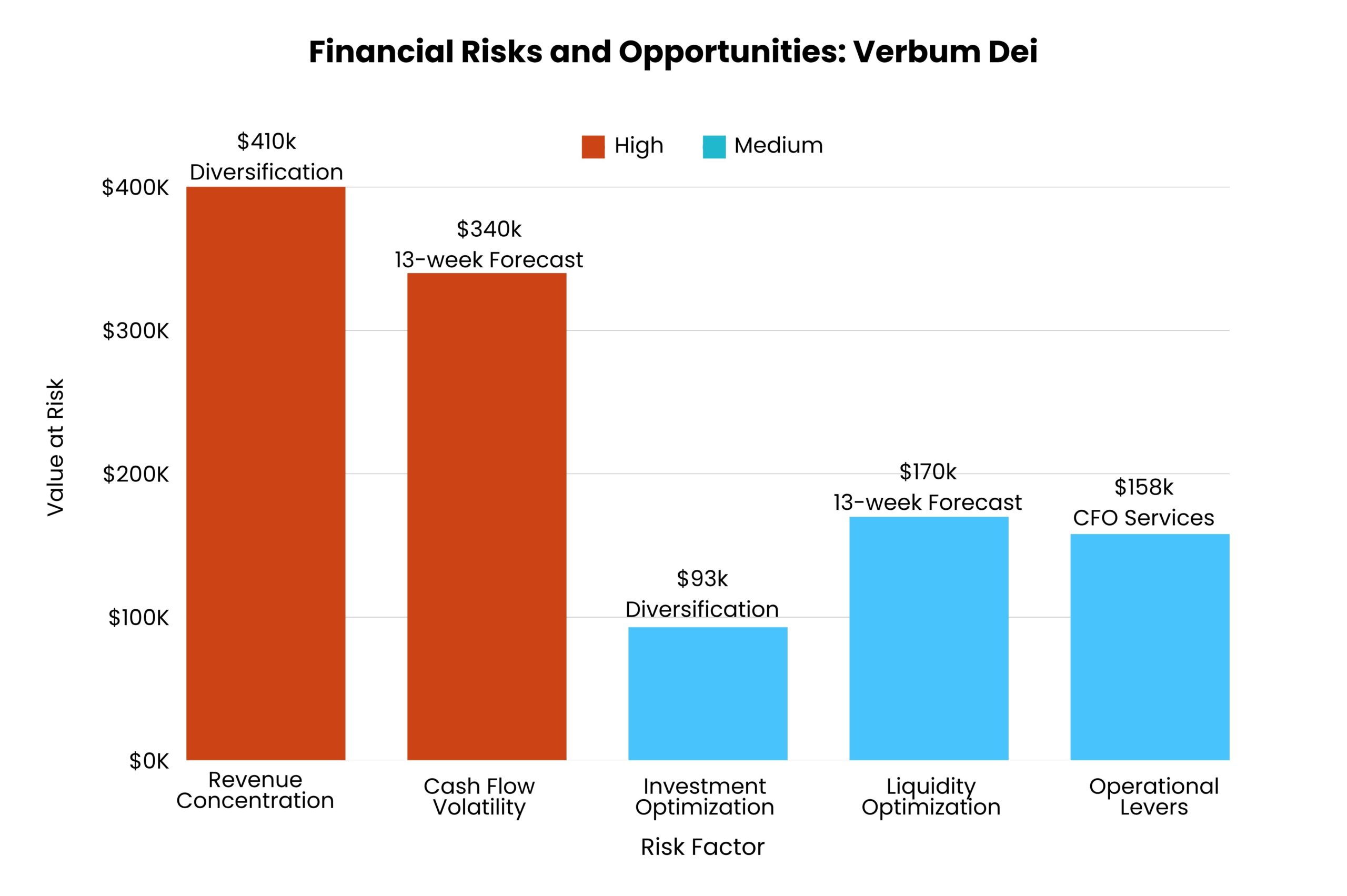
51.9% donation dependency creates $410,000 annual value at risk from potential 10% revenue decline. Mitigation through revenue diversification planning and donor stewardship enhancement.

Cash Flow Volatility

10.5x volatility ratio threatens $340,000 value at risk from liquidity crisis. Mitigation through 13-week rolling forecasting and cash management protocols.

Governance Gaps

Limited CFO-level oversight creates immeasurable governance risk. Mitigation through professional fractional CFO services and board governance enhancement.

Medium-Impact Risk Factors

Investment Underperformance

3.8% yield versus market potential creates $93,000 annual opportunity cost. Mitigation through asset allocation optimization and yield enhancement strategies.

Liquidity Optimization

$10.5M excess cash underutilization creates $170,000 opportunity cost. Mitigation through strategic cash deployment and investment protocols.

Operational Levers

Verbum Dei operates within market norms but shows opportunities for 2% efficiency gains worth approximately $158,000 annually.

Risk FactorValue at Risk / Opportunity CostSource Calculation
Donation Dependency$410,000.00$4.1M donations × 10%
Cash Flow Volatility$340,000.00Largest single negative monthly outflow
Investment Underperformance$93,000.00$9.3M × 1% yield gap
Liquidity Optimization$170,000.00$8.5M × 2% yield gap
Operational Levers$146,000.00$7.3M × 2% Operational Optimization

Next steps & Engagement

1. Board Approval Process

Timeline

2-3 weeks for board review and approval

Requirements

Finance Committee recommendation to full Board

Documentation

Service agreement and compensation structure approval

2. Engagement Kickoff

Discovery Meeting:

Comprehensive stakeholder alignment session

Service Agreement

Contract execution and payment terms setup

Implementation Launch

Week 1 service delivery commencement

3. Success Metrics Establishment

KPI Definition

Board-approved performance targets for FY2026

Reporting Framework

Monthly progress tracking and quarterly reviews

Annual Evaluation

Success fee assessment and service renewal consideration
Verbum Dei X Scout Financial

Base Service Investment 

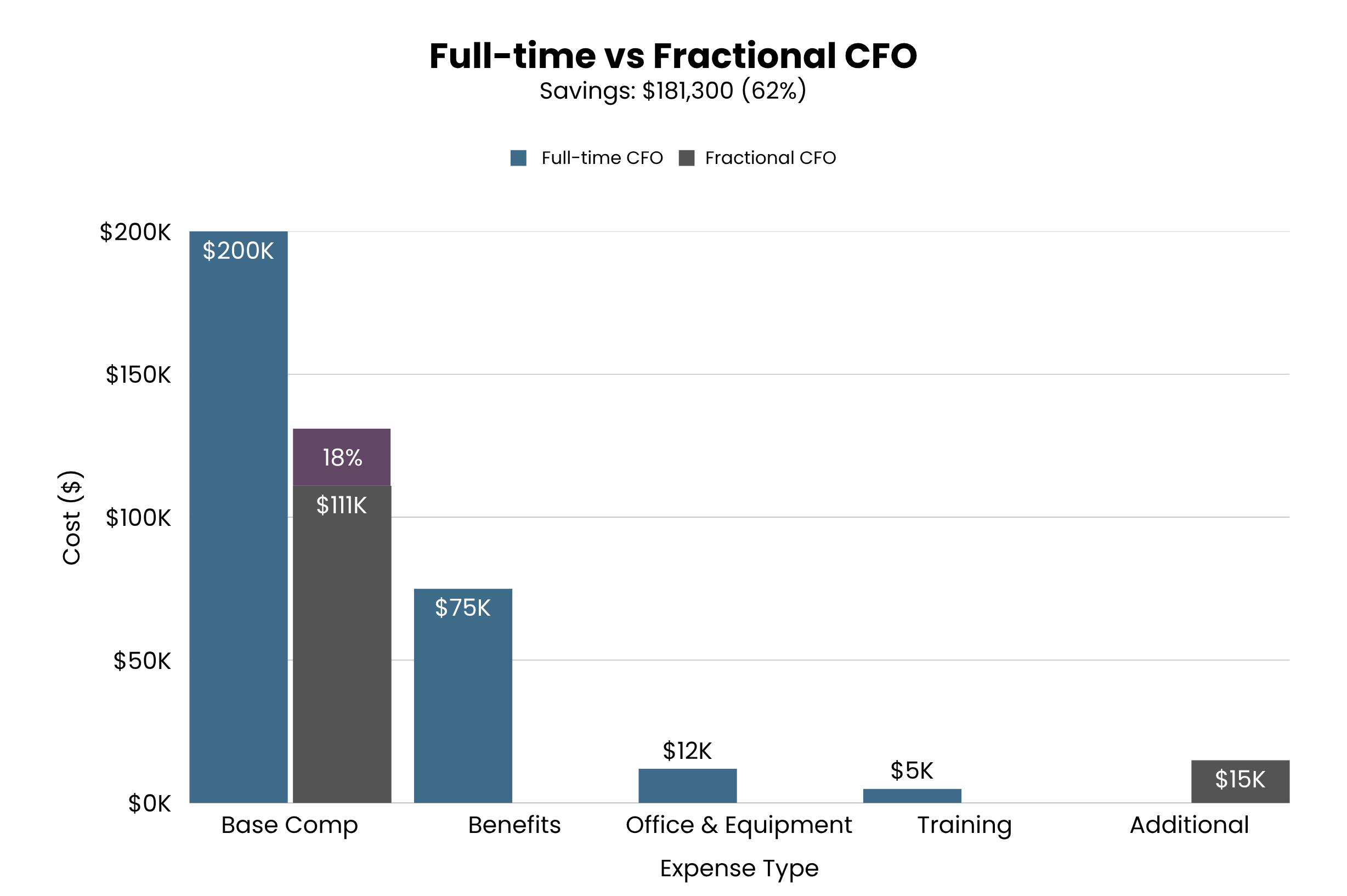
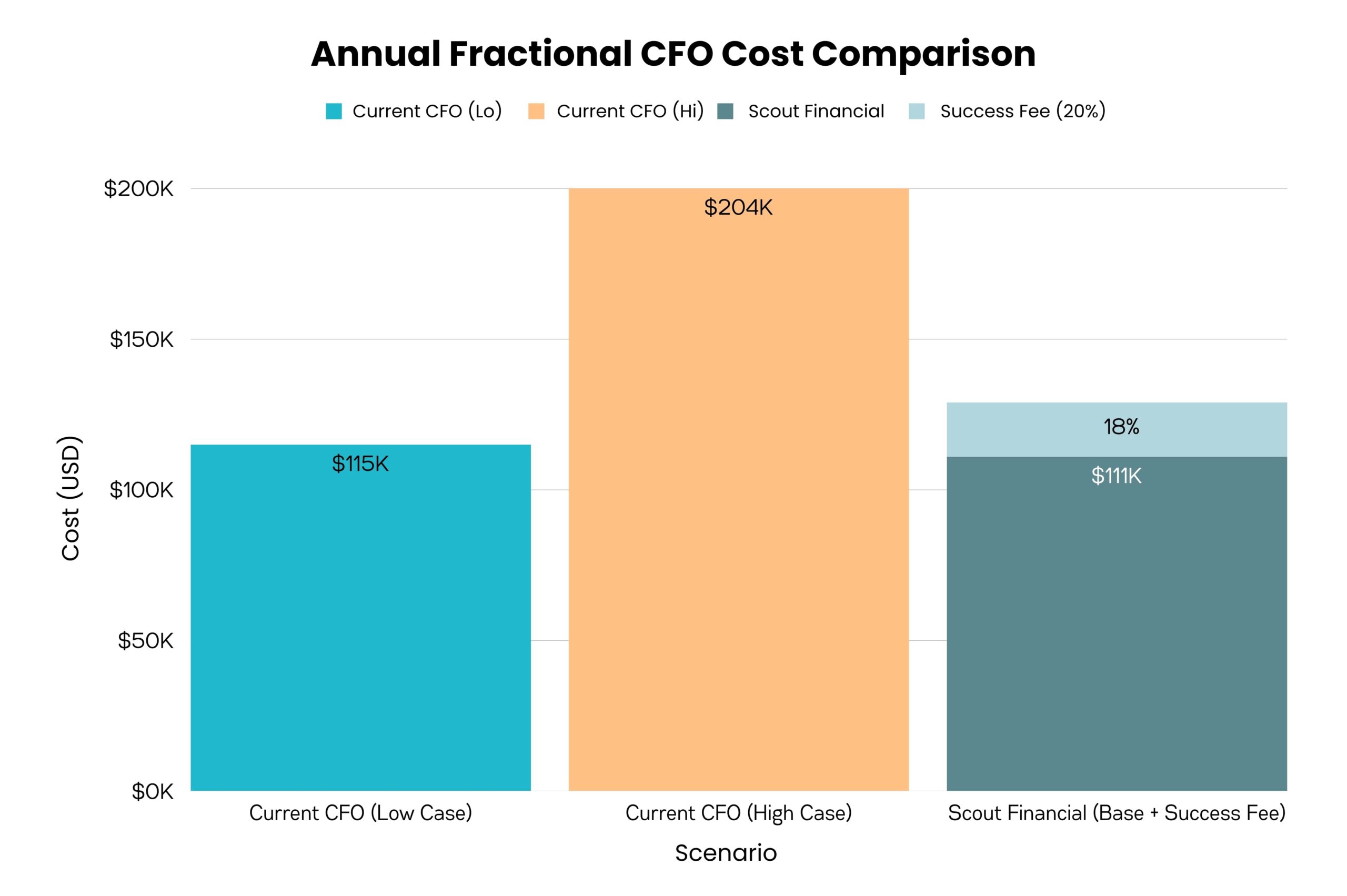
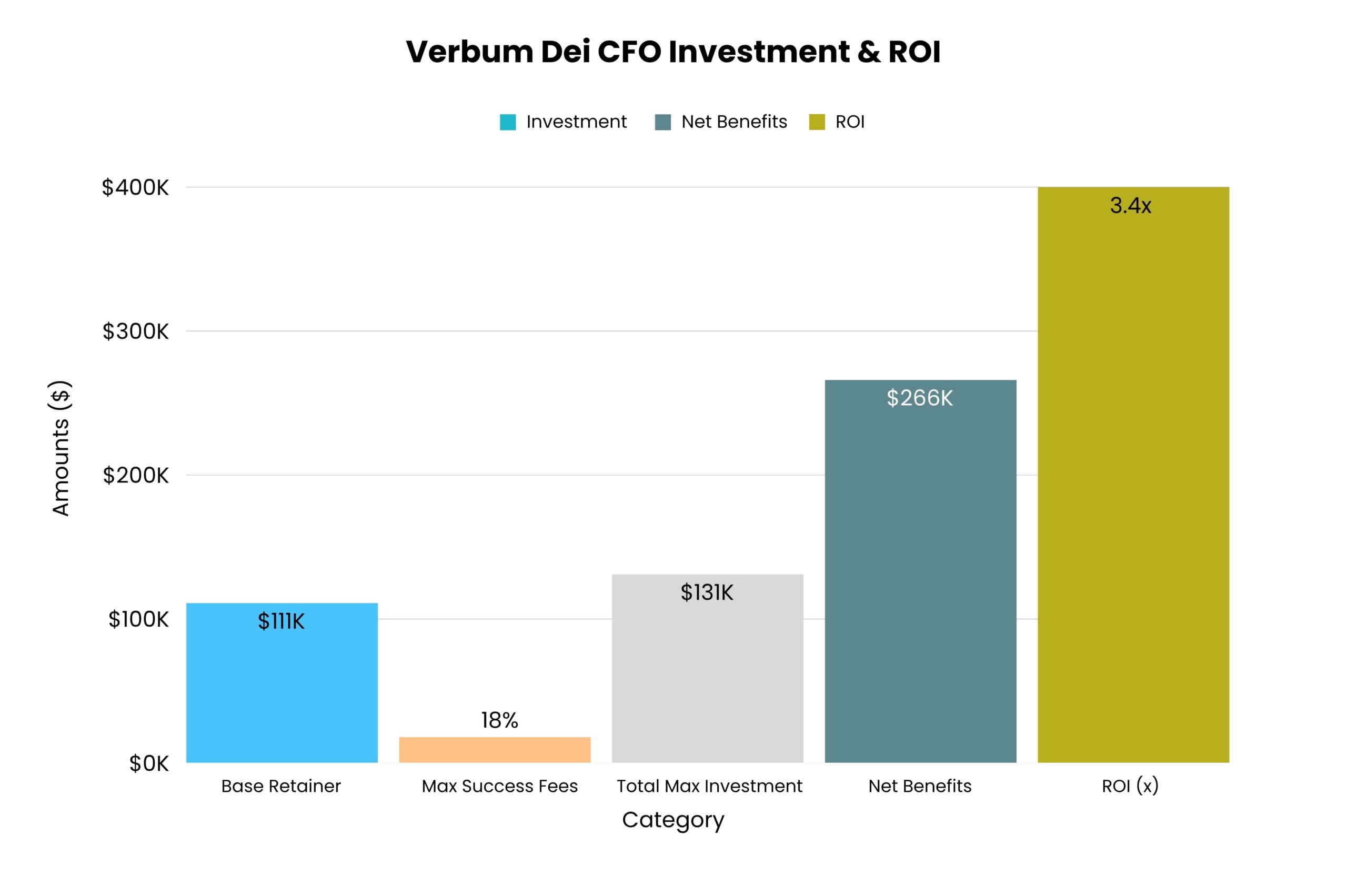
Annual Retainer: $111,000 

Service Scope Coverage 

Performance-Based Success Fees 

Success Fee Structure capped @ 18% of service fee

Expense Savings Bonus: $10,000

Trigger: FY2026 expenses $100K+ under $7.3M budget 
Rationale: Operational efficiency improvements through vendor optimization and cost controls 

Deficit Elimination Bonus: $10,000

Trigger: Convert projected $182K deficit to break-even or surplus 
Rationale: Financial stewardship preserves reserves and program funding 

Cash & Liquidity Improvement Bonus: $10,000

Trigger: Increase cash position by $1M+ or achieve 20% donor diversification 
Rationale: Enhanced financial resilience and reduced concentration risk 

Success Fee Governance 

Total Investment Analysis

Annual Investment Range 

Return on Investment 

Contract Structure 

12-Month Engagement Terms 

Service Delivery Model